Spanish Fork Foundation Pros
Wall Stabilization in Spanish Fork, UT
Wall stabilization in Spanish Fork, UT: carbon fiber straps, steel I-beams, wall anchors, free written estimates.
- 15+ Years local experience
- 500+ Projects completed
- Licensed & Insured
Serving Spanish Fork and nearby communities.
A basement wall that bows inward isn't settling, it's being pushed. Hydrostatic pressure builds against foundation walls every spring as snowmelt soaks into the soil around Spanish Fork homes, and if that pressure outpaces the wall's strength, you get a bow, a horizontal crack, or both. Spanish Fork Foundation Pros stabilizes the wall before the movement gets worse.
The right fix depends on how far the wall has already moved. Minor bowing often responds to carbon fiber reinforcement. More advanced cases need steel bracing or exterior anchors to actually push back against the soil pressure, not just hold the current position.
What's included
What's Included with Wall Stabilization
Typically included: wall inspection and bow measurement, pressure assessment, reinforcement method selection, anchor or brace installation, tensioning, final inspection.
Optional: exterior drainage tie-in to reduce future hydrostatic load on the wall, moisture barrier coating applied over the reinforced area.
Customer prep: clear basement storage or furniture away from the affected wall section before the crew arrives.
Want a clearer scope?
Get a Free EstimateHow it works
How Our Wall Stabilization Process Works
 Step 1
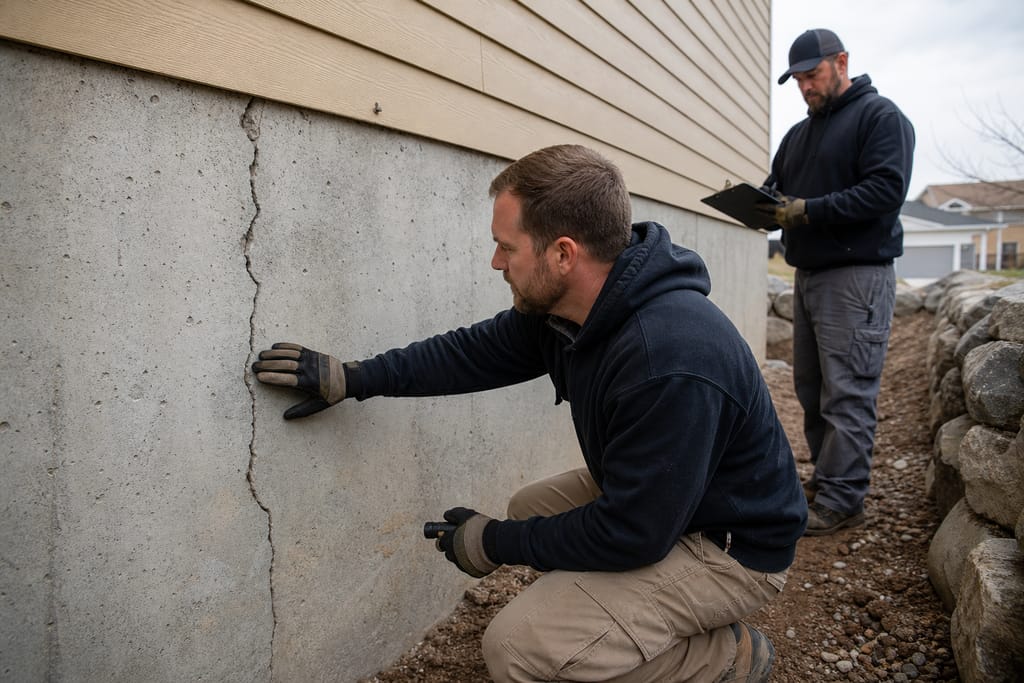
Wall Inspection
Crews check for bowing, horizontal cracking, and leaning along the basement wall.
 Step 2
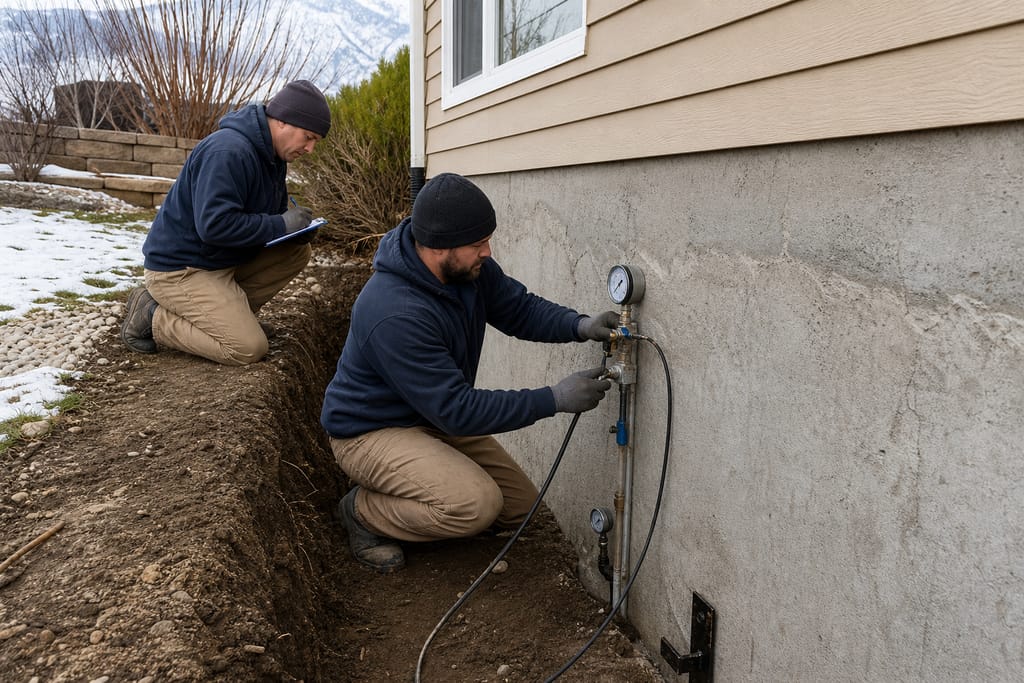
Pressure Assessment
Soil moisture and hydrostatic pressure driving the movement get evaluated.
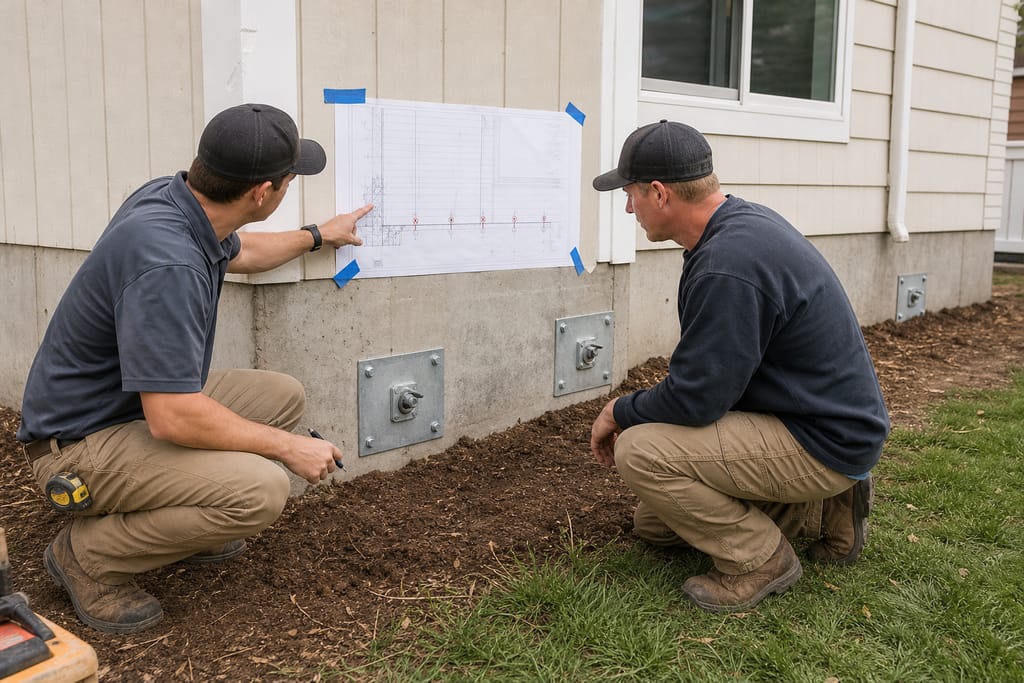 Step 3
Reinforcement Planning
A stabilization method gets chosen based on how far the wall has moved.
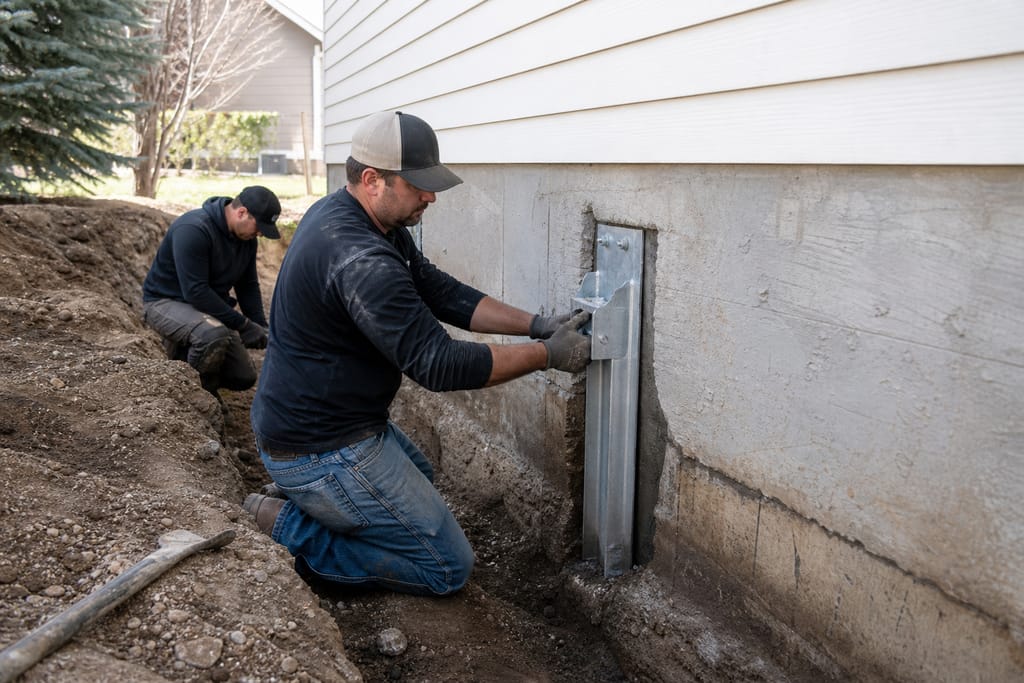 Step 4
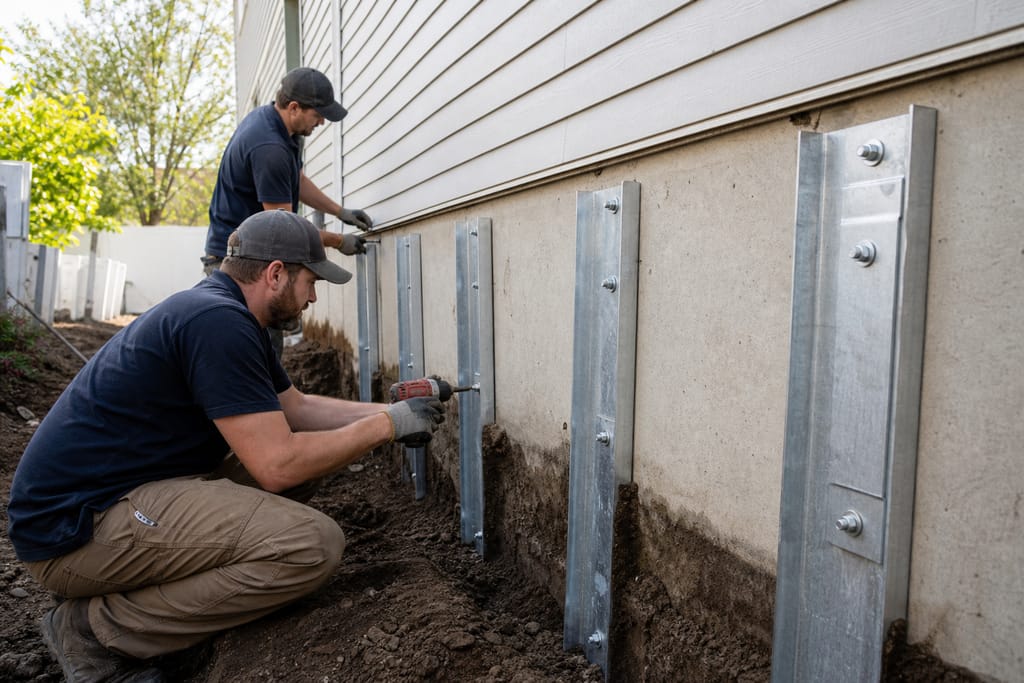
Anchor Or Brace Installation
Steel or carbon fiber systems go in to stop further movement.
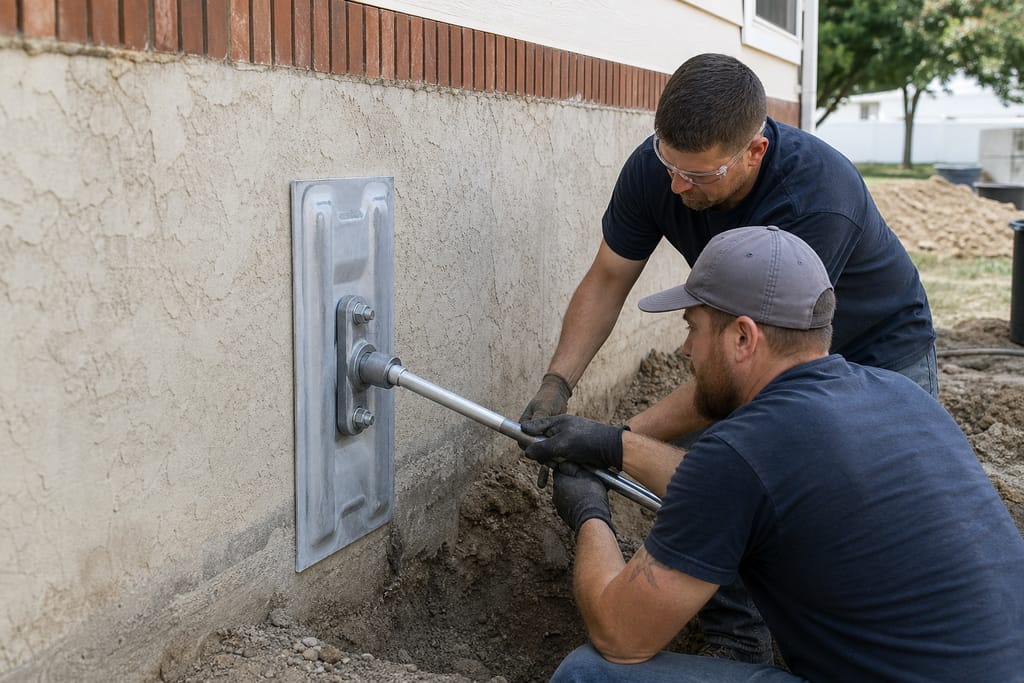 Step 5
Tensioning Adjustment
Anchors or braces get tightened to gradually stabilize the wall.
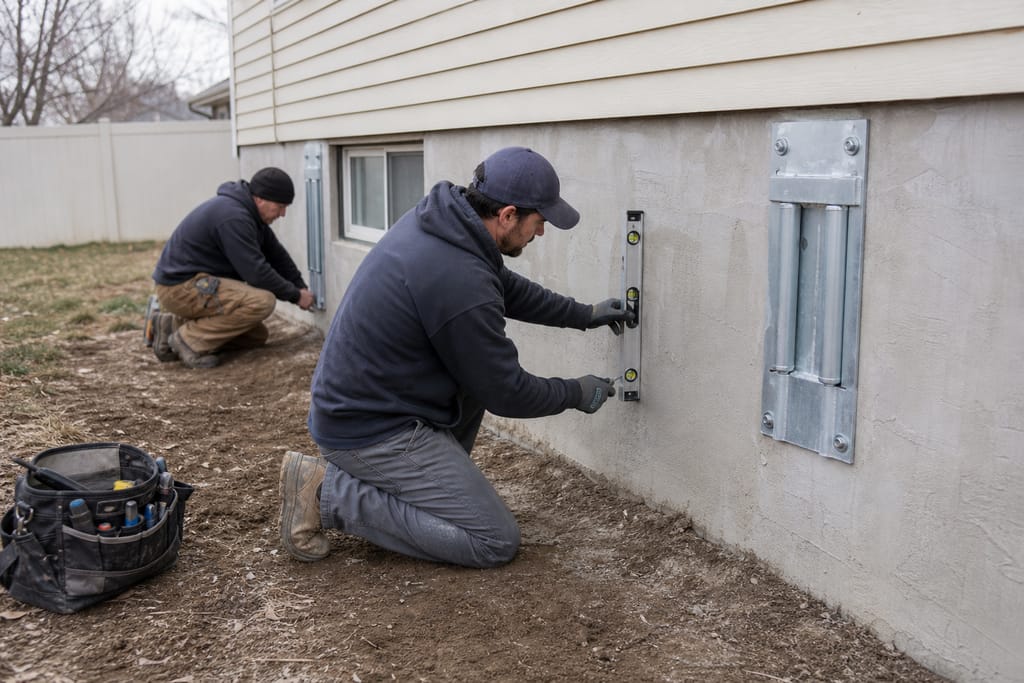 Step 6
Final Inspection
The wall is rechecked to confirm it holds and the install is solid.
Materials
Materials and Methods for Wall Stabilization
Material choice depends on how much the wall has already bowed and how much pressure is still building against it.
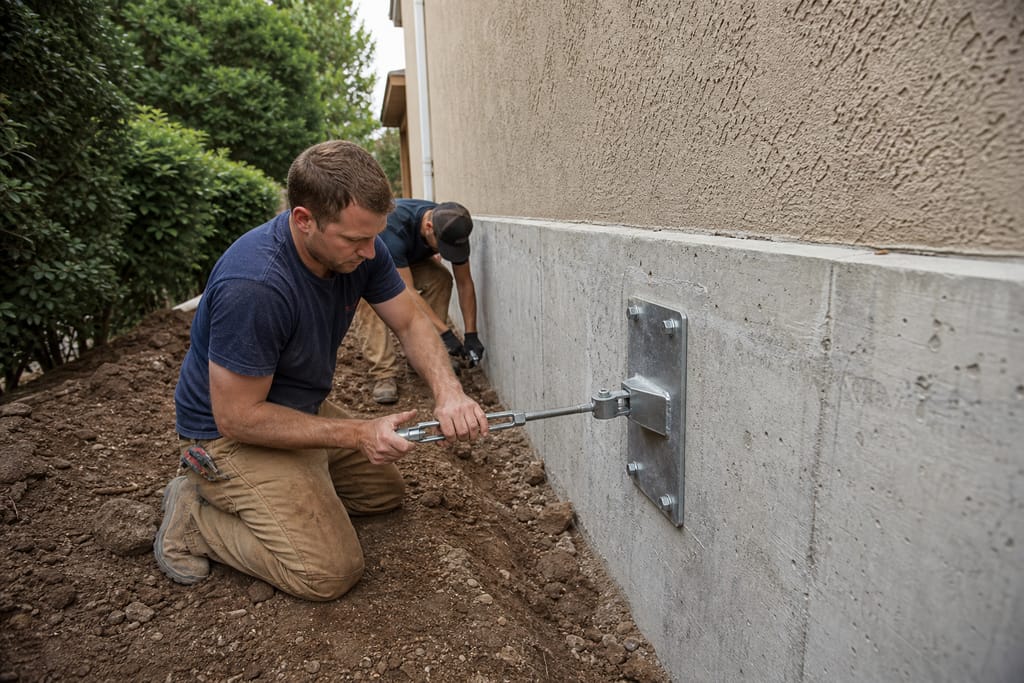
Wall Anchors
Installed in the yard to pull back against inward pressure from snowmelt-soaked soil.
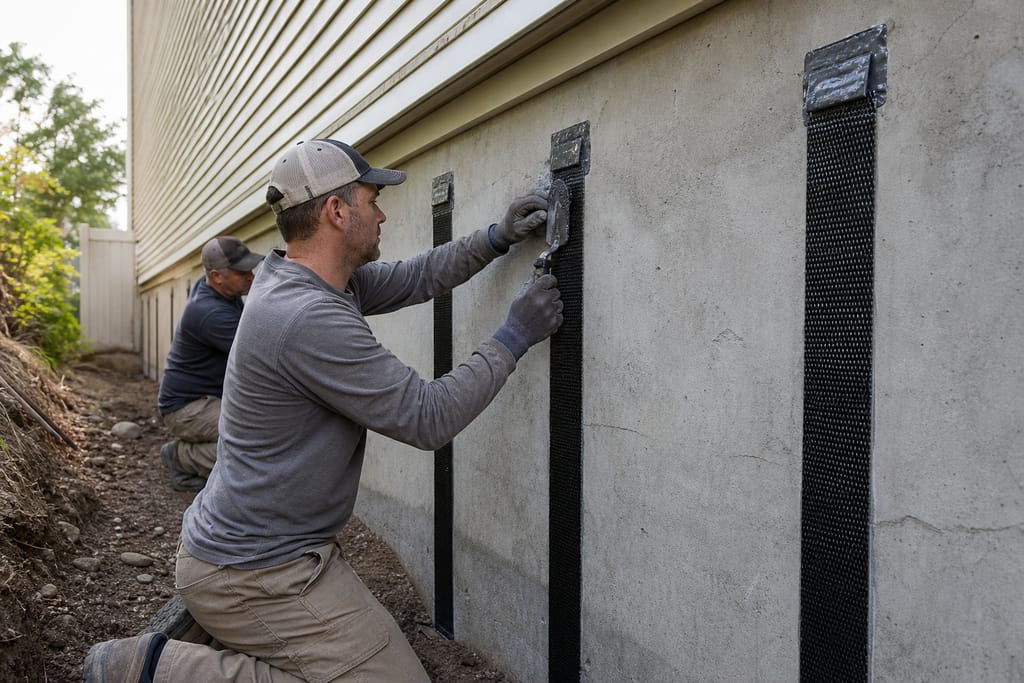
Carbon Fiber Straps
Reinforce walls with minor bowing without digging up the yard.
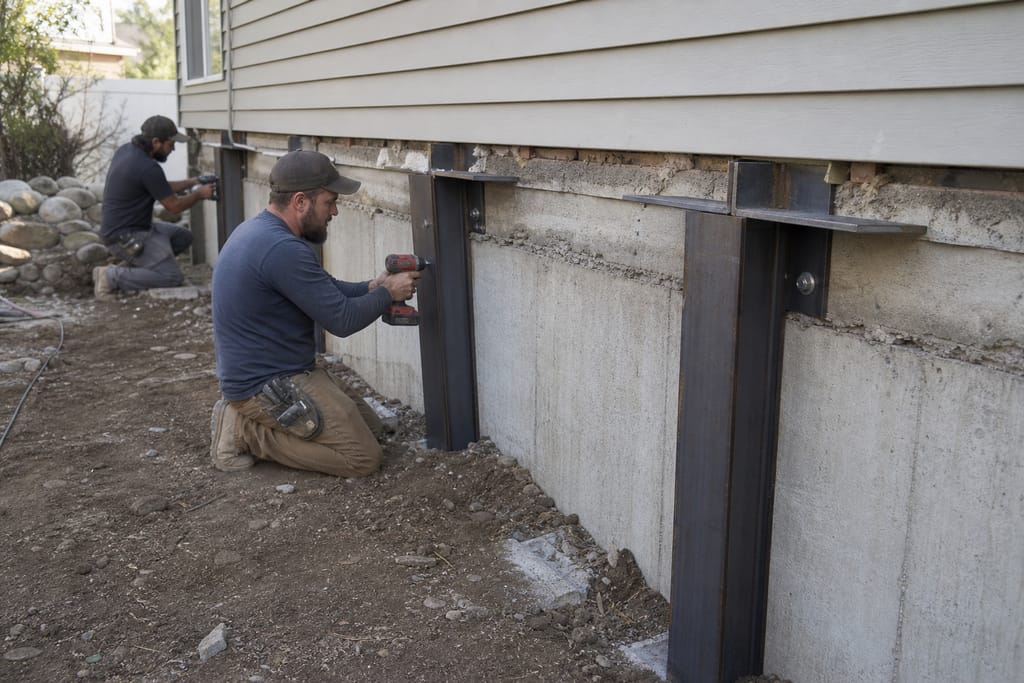
Steel I-Beams
Provide rigid bracing for walls that have moved further and need stronger resistance.
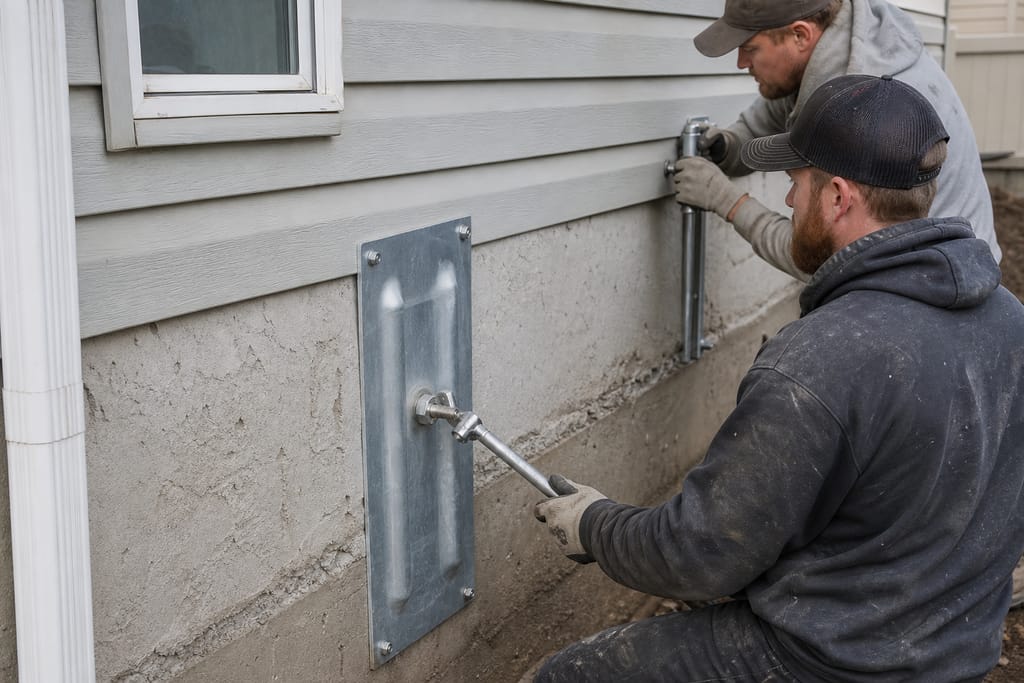
Wall Plates
Spread anchor tension evenly instead of concentrating stress at one point.
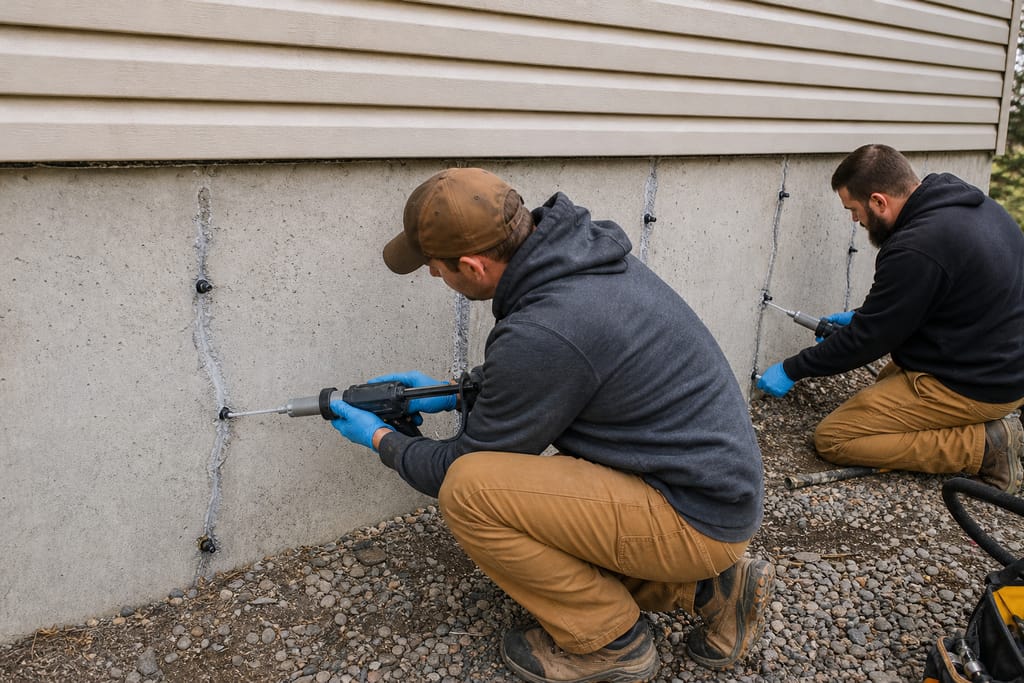
Epoxy Crack Filler
Seals existing cracks before reinforcement goes on so moisture can't keep working behind it.
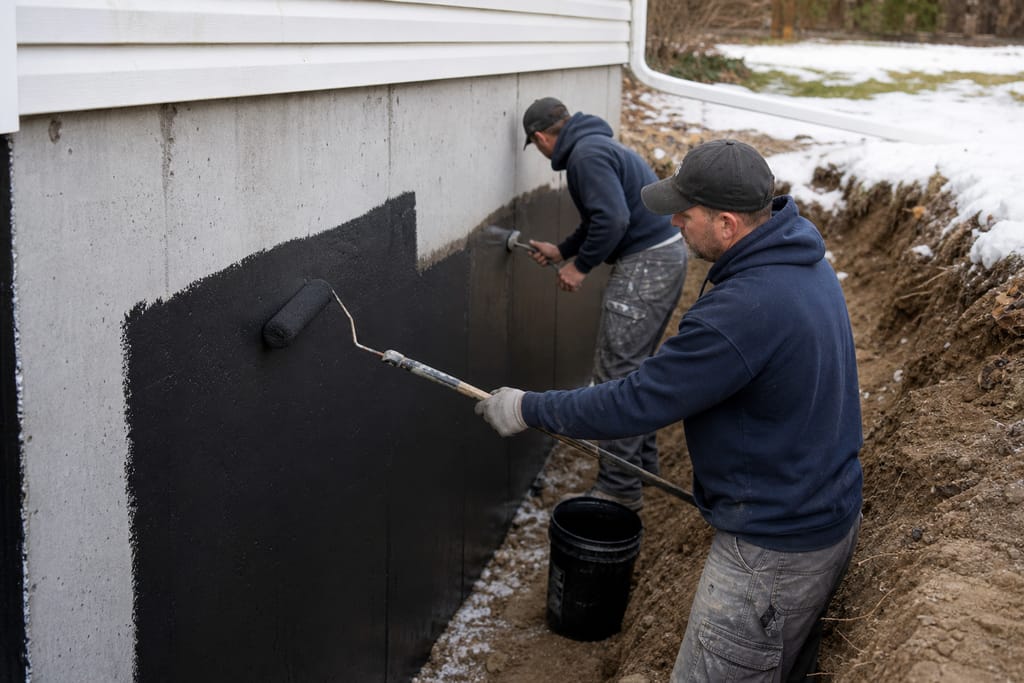
Moisture Barrier Coating
Protects the reinforced wall from the same seasonal dampness that caused the bow.
Questions on materials?
Get a Free EstimateTimeline
How long does a Wall Stabilization take?
A typical stabilization job moves from inspection to finished install within a week.
- 01
Consult and inspection
same day - 02
Written estimate
1–2 days - 03
Permit approval
1–2 weeks - 04
Reinforcement install
1–2 days - 05
Final inspection
same day
Need a schedule that fits?
Get a Free EstimateFAQs
Wall Stabilization FAQs
Why does my wall bow more after snow melts?
Melting snow saturates the soil against the basement wall, and that saturated soil pushes with far more force than dry soil does, which is what drives spring bowing.
Can a bowed wall be pushed back straight?
Some movement can be corrected gradually with wall anchors over time. Carbon fiber and steel bracing mainly stop further movement rather than fully reversing an existing bow.
Is a hairline crack on my basement wall serious?
A hairline vertical crack is usually cosmetic. A horizontal or diagonal crack paired with visible bowing signals structural pressure and needs a professional look.
What's the difference between carbon fiber and steel bracing?
Carbon fiber suits minor bowing and installs with minimal disruption. Steel I-beams handle more advanced movement where stronger resistance is needed.
Do I need a permit for wall stabilization?
Structural wall bracing typically needs a permit since it affects the load-bearing wall.
Should I fix drainage before or after stabilizing the wall?
Addressing exterior drainage alongside stabilization reduces the chance the same hydrostatic pressure causes problems again.
When to call
When to Call for Wall Stabilization
Call (385) 437-6742 for a free wall inspection before the movement gets worse. <!-- rover-autofix-links -->
- Visible inward bow in a basement wall, especially after spring snowmelt
- Horizontal or stair-step cracking across a wall
- Water seeping in along a cracked or bowed section
- Doors or windows near the basement sticking or misaligning
- [Home](/)
- [Contact](/contact)
Seeing warning signs?
Get a Free EstimateNext step
Get a Wall Stabilization Estimate in Spanish Fork
Spanish Fork Foundation Pros will measure the bow, explain the cause, and give you a written repair scope. Call or request a free estimate today.
Before & after
Before and After Wall Stabilization
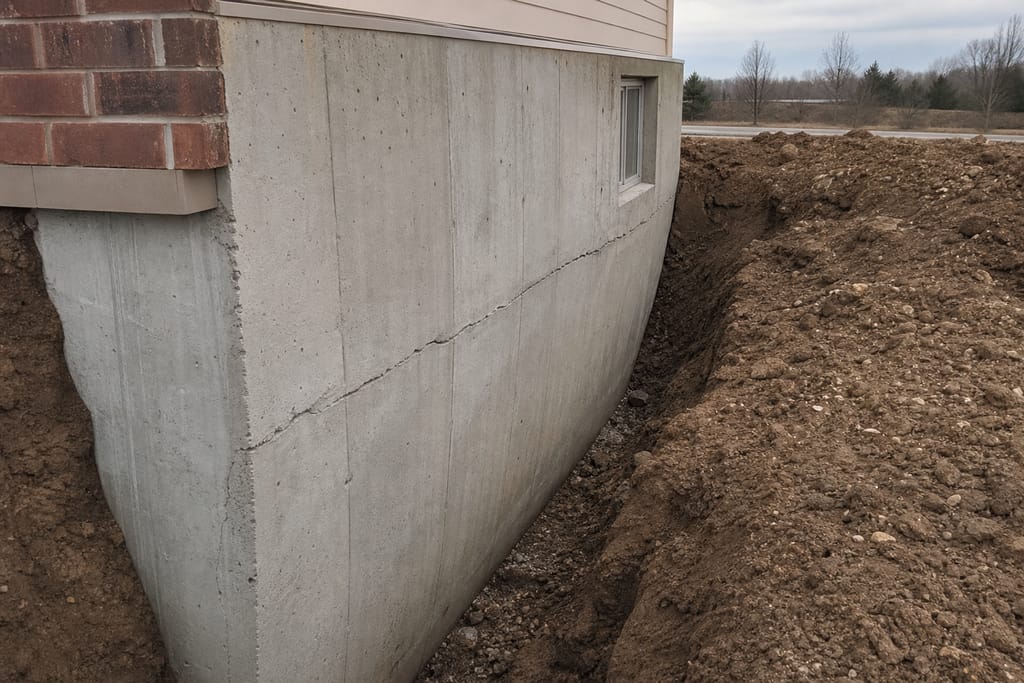
Before 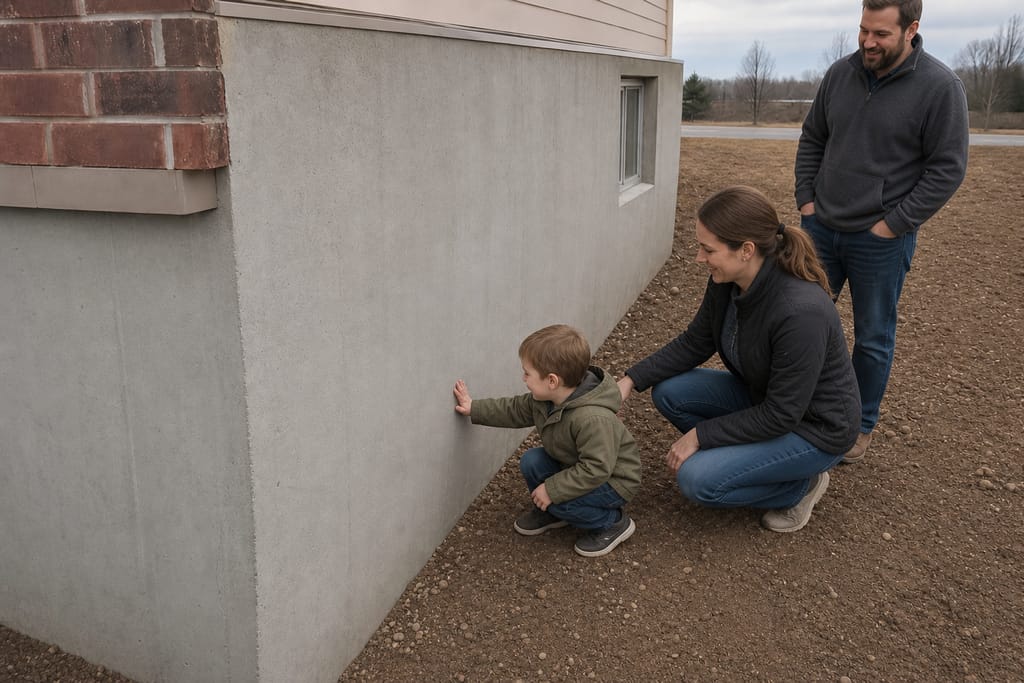
After
More services
Other Foundation Repair services
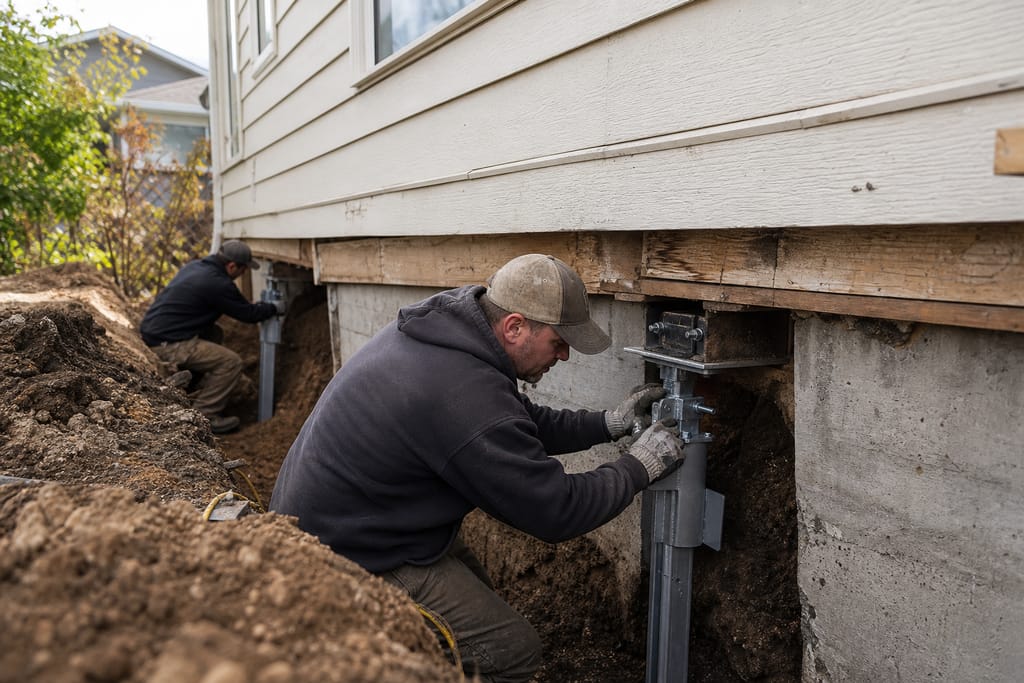
Foundation Repair
Foundation repair in Spanish Fork: piering, crack sealing, and underpinning for settling homes. Free estimates, no pressure.
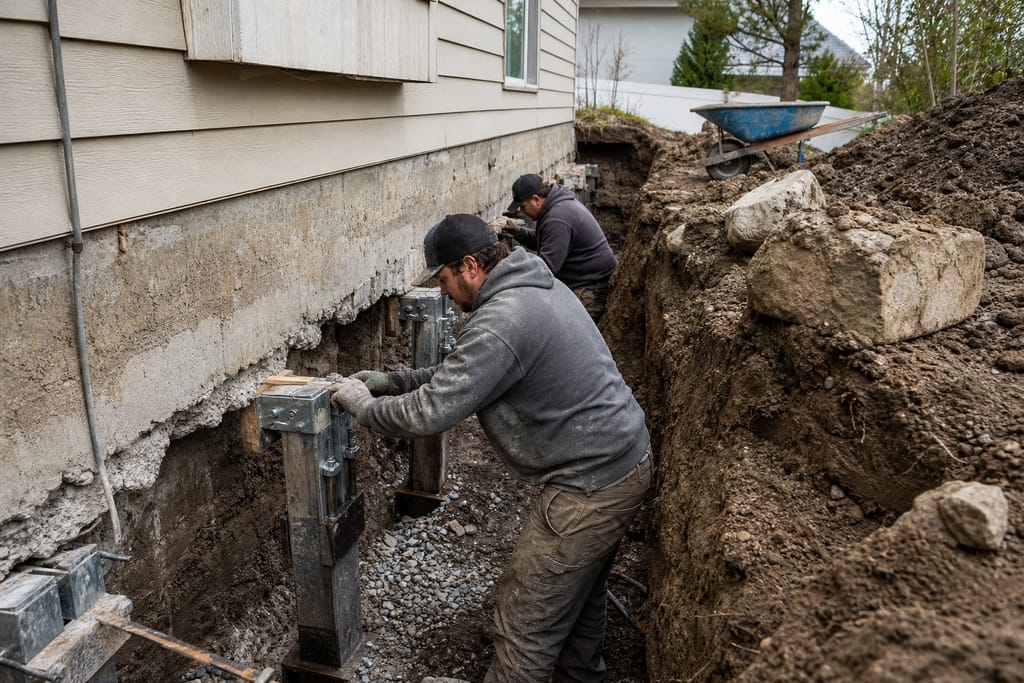
Piering and Underpinning
Steel and helical piers stop active settlement in Spanish Fork homes, load transfer brackets included, free written estimates.
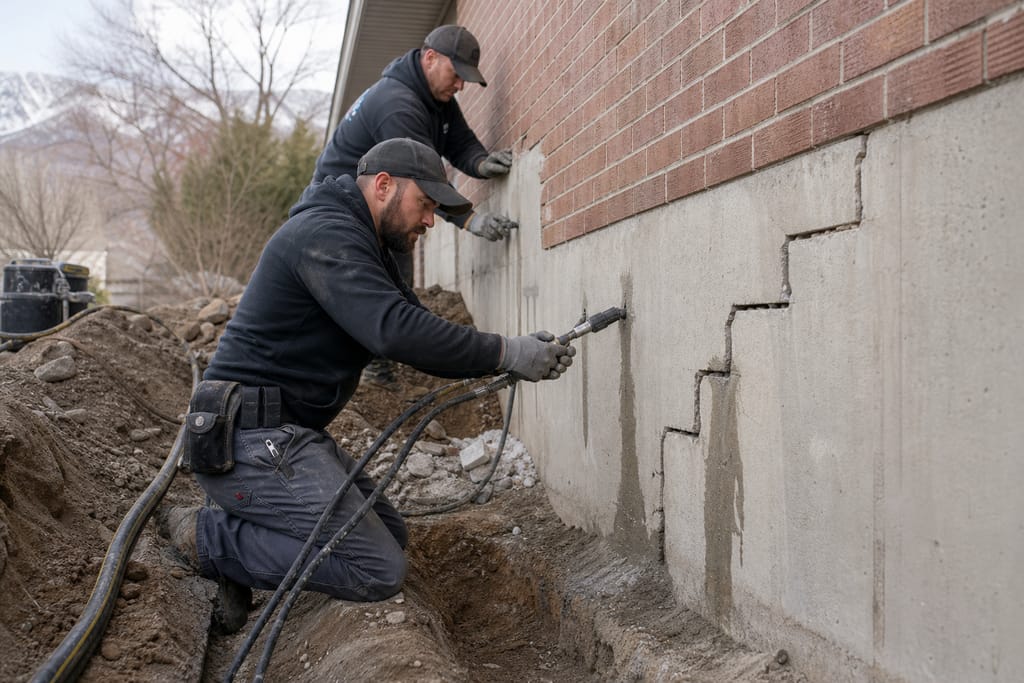
Foundation Crack Repair
Foundation crack repair in Spanish Fork, UT: epoxy and polyurethane injection, free written estimates, same-day options.
Ask about Wall Stabilization
Tell us about the project and how to reach you.